Pick the sea before you pick the boat. The Caribbean proper, which runs from the Virgin Islands south to Grenada, and the Bahamas are two different cruising grounds with different wind, and choosing between them settles most of your week.
After that the order is: match the island group to the people aboard, go south to the Grenadines if you want empty water, use St Maarten as your hub if St Barts is on the list, and book around the hurricane season.
Three of our brokers supplied this list. Most of it is John Boullin’s, who cruised the Bahamas on his own catamaran and spent a month in the Grenadines.
Quick answer
- The Bahamas is not in the Caribbean. Different ocean, different wind, different week.
- The BVI are the softest landing: hops under an hour, somewhere ashore at the end of most of them.
- The Grenadines are the emptiest water in the chain, and the hardest to reach.
- Peak season is December to April. From July to October most of the fleet has left, and insurance is the reason.
1. Decide whether you want the Caribbean or the Bahamas
The Bahamas is not in the Caribbean. It sits in the Atlantic, north of Cuba, and its weather works differently.
From November to March, cold fronts roll off the North American mainland and cross the Bahamas roughly once a week. As each one passes the wind clocks round the compass, from south-east through south-west and north-west before settling back into the east.
The anchorage that was sheltered on Monday can be the exposed one on Wednesday.
The Caribbean proper sits in the trade winds instead. From December to April the breeze blows from the north-east or east most days, strongest around Christmas, and the leeward side of every island is a reliable anchorage all week. That is what makes it the easier first charter.
What the Bahamas gives back is space and water. Ana Domingo, a broker with our sister brand Amwax Prime, sends people there when the priorities are watersports, privacy and water color.
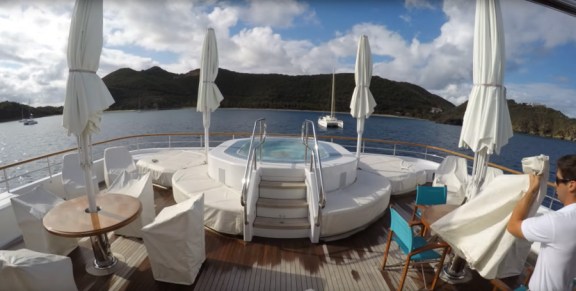
The Exuma banks are shallow, often under twenty feet, and flat calm behind the cays, so yachts carrying several jet skis earn their keep every day rather than when the swell allows, and with hundreds of cays an empty anchorage is never far.
Shallow water is also where a power catamaran pays off, because it draws less than a monohull of the same length.
2. Match the island group to the people aboard
The cruising ground sets the rhythm of the week. A group that wants short hops and a bar at the other end will not enjoy open-water passages.
The British Virgin Islands are the softest landing in the region. The whole cruising ground fits inside about 30 miles east to west, the hops are mostly under an hour, and there is somewhere to go ashore at the end of nearly all of them.
If half your party has never been on a yacht, start here, and on hops that short a yacht under 100ft gives up very little.
The Leeward Islands, from Anguilla down to Antigua, are for people who want restaurants, shopping and a different island most days.
The Windward Islands, from Martinique south to Grenada, sit further apart with open Atlantic channels between them, and suit a group that likes a proper passage and a quiet anchorage at the end of it.
Three boats on this site, one for each of those answers:
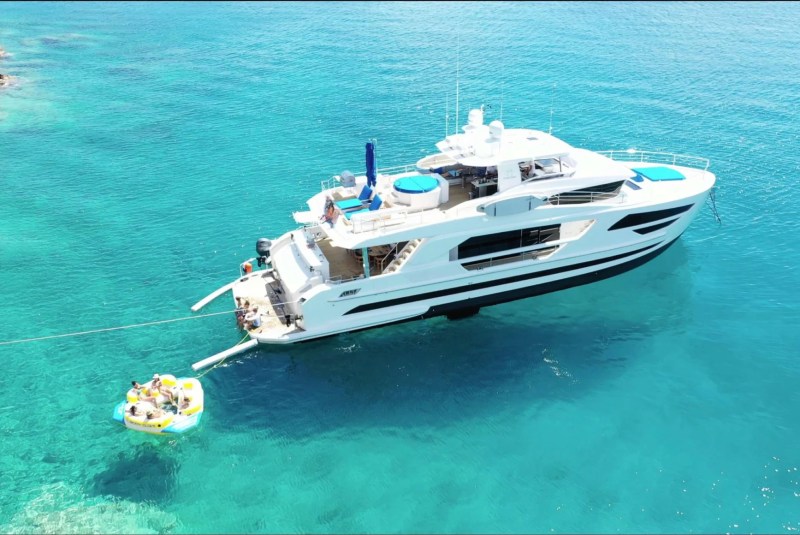
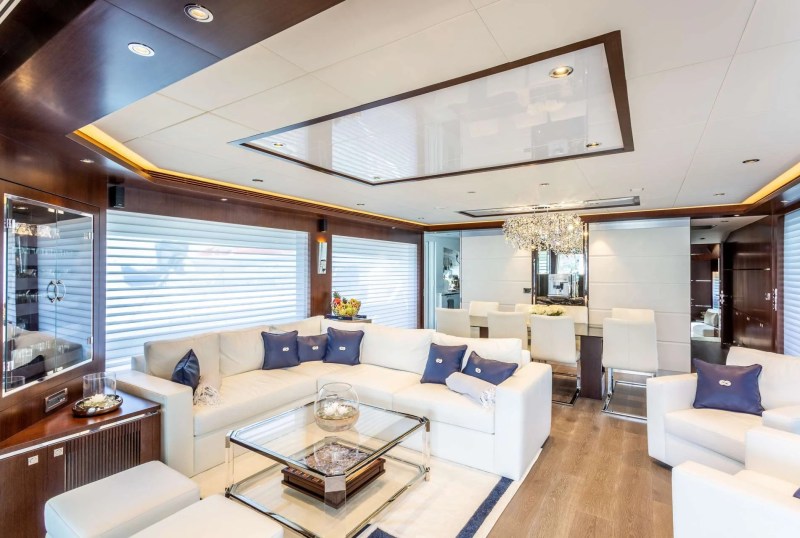
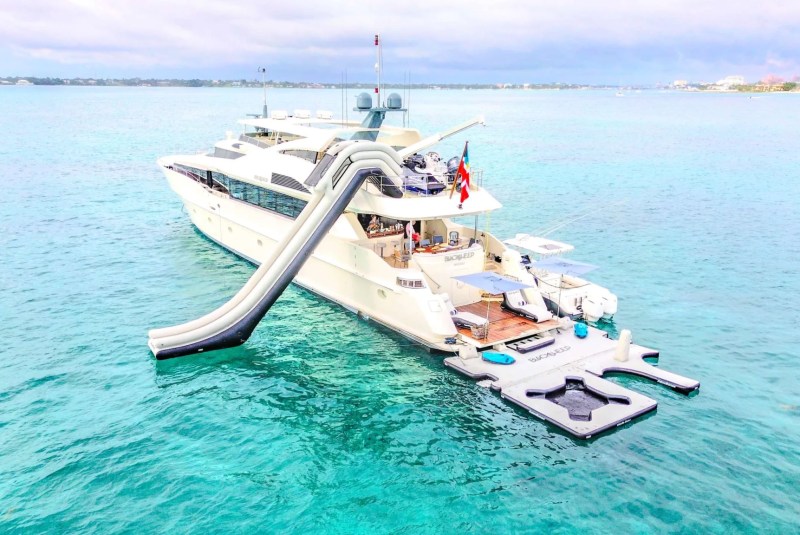
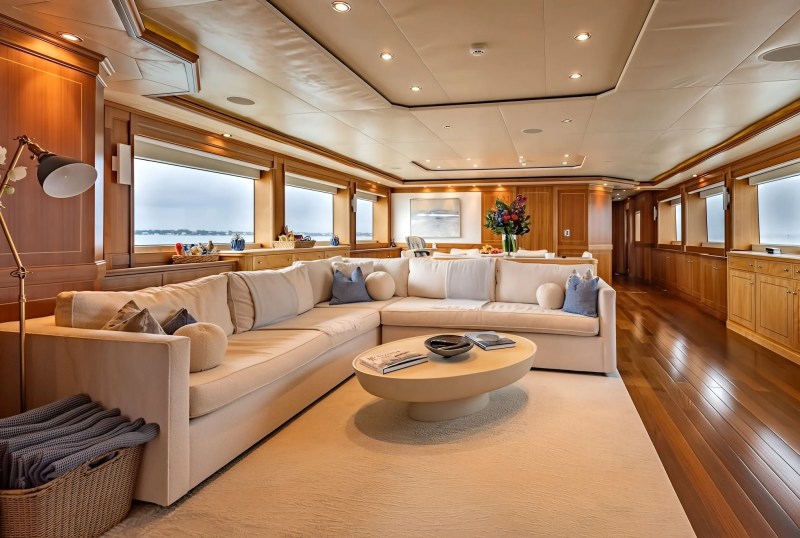
ANGELEYES is a Horizon 86 running all-inclusive terms in the BVI, which is the simplest way to do a first charter. 5 PALMS, an 88ft Ferretti from 2024, lists both the Caribbean and the Bahamas, so on that boat the choice of ground can wait.
BLACKSHEEP, a 123ft Palmer Johnson based in St Thomas and refitted in 2023, lists the Leewards and the Windwards and is the one for a group that wants the passages.
All three take eight to ten guests, so the difference between them is the water, not the size of your party. Most Caribbean motor yacht weeks on this site land between $60,000 and $150,000, with the middle of the fleet around $70,000.
3. Go south to the Grenadines if you want empty water
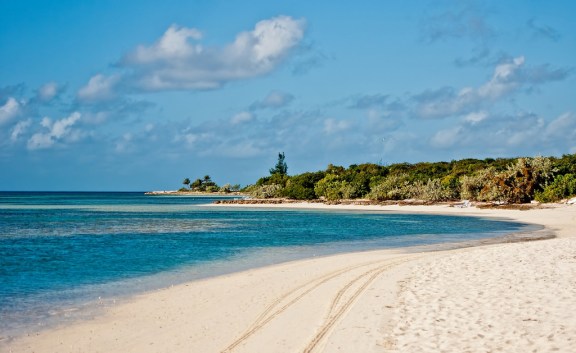
The Tobago Cays are five uninhabited cays inside a sand-bottom lagoon behind the two and a half mile Horseshoe Reef. The whole area is a marine park run by the government of St Vincent and the Grenadines, and the shallows off Baradal are a protected turtle area where green turtles graze on the seagrass.
Bequia, nine miles south of St Vincent, is the counterweight: old school, unpolished, with a wide anchorage at Admiralty Bay that has been a liveaboard stop for decades. Mustique is privately owned, so treat it as somewhere you anchor off Britannia Bay and go ashore for lunch rather than a place to explore.
Broker insight
I sailed the Grenadines for a month and it is one of the nicest places in the Caribbean, no question. In the Tobago Cays you swim an inch away from the turtles. Bequia is very old school, a beautiful anchorage that liveaboard cruisers have used for years. Mustique you cannot land on, it is a private island, so you anchor off and go ashore for lunch.
 John Boullin
Charter Broker
John Boullin
Charter Broker
The catch is getting there, not the daily hops. Inside the chain the legs are short, Bequia to Mustique about nine miles and Canouan to the Tobago Cays about eight.
But the Grenadines sit at the bottom of the Caribbean, roughly 300 miles south of St Maarten. Fly into St Vincent, Canouan or Grenada and join a yacht already positioned in the Windwards that month, or expect to pay for the repositioning if the boat has to come down from the Leewards to meet you.
4. Use St Maarten as your hub if St Barts is on the list
St Maarten works as a base because it has the airlift. Princess Juliana airport takes direct flights from North America and Europe, and the marinas on Simpson Bay Lagoon are minutes away. St Barts is 16 miles to the south-east, an easy morning run to Gustavia.
Anguilla is directly north across a five-mile channel.
When St Barts pricing is the sticking point, Anguilla is where we send people instead. Shoal Bay East and Meads Bay stand comparison with anything on St Barts, and Cap Juluca, the Four Seasons and Malliouhana sit on the same tier as Eden Rock or Cheval Blanc without the Gustavia premium.
The test is simple. If the hotels you would pick on St Barts are Eden Rock and Cheval Blanc, budget for Gustavia. If Cap Juluca and Malliouhana read just as well to you, Anguilla gives you the same week for less, and the yacht can end there.
Ask whether the yacht will finish the charter in Anguilla or St Barts rather than back in St Maarten. Many will, which turns a hub-and-spoke week into a one-way route and saves a day of backtracking.
The largest yachts we list winter in these islands and will usually build the route around you.
5. Book around the hurricane season
Peak season runs December to April. May, June and November are the shoulders, and across the yachts on this site that publish both a low and a high season rate the gap between the two is typically 10 to 15 percent.
The Atlantic hurricane season officially runs from 1 June to 30 November. From July to October the fleet thins out, and the reason is not that owners dislike the weather.
Broker insight
Clients often tell me they do not mind the weather in the summer, and I have to explain that it is not really their call. The yacht's insurance does not allow her to stay in the Virgin Islands through hurricane season, so the boat leaves whether you mind or not. The Virgins sit right in the strike zone with no mainland to run to. The Bahamas get affected too, but they are closer to the coast and have somewhere to go.
 Louis Lamprell
Charter Broker, Active CYBA Member
Louis Lamprell
Charter Broker, Active CYBA Member
Where the fleet moves to is the useful part. Insurance terms vary by underwriter, but the conventional Caribbean-market hurricane zone runs north of 12 degrees 40 minutes north, a line through the Grenadines just above Carriacou.
Grenada, at about 12 degrees north, sits below it, which is why it is the most common summer base in the chain.
South of the line is a strong probability, not a guarantee. Hurricane Beryl made landfall on Carriacou on 1 July 2024 as a Category 4 storm, south of that line, and caused severe damage across the island. Hurricane Ivan hit Grenada itself as a Category 3 in September 2004.
So for a summer week, get three answers in writing before you book: where the yacht will be based that month, what happens to your dates and your money if a named storm closes the area, and whether your travel insurance covers a named-storm cancellation.
Who wrote this
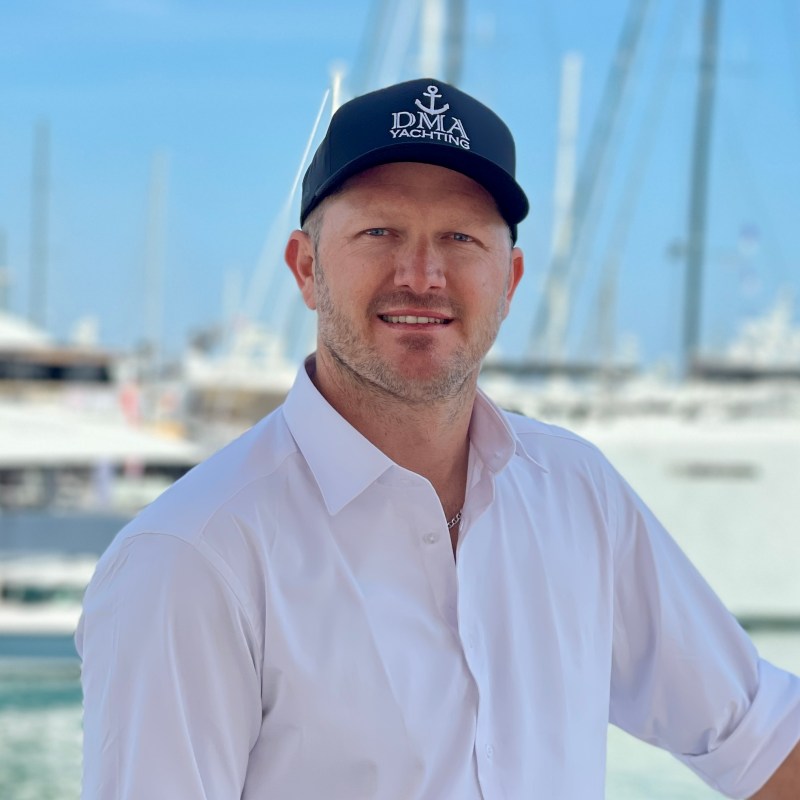
 John Boullin is a charter broker with DMA Yachting, the brokerage behind caribbeanmotoryachts.com. He has cruised the Bahamas on his own catamaran and spent a month in the Grenadines, and most of the routing advice above is his. Ana Domingo of Amwax Prime contributed the Bahamas comparison, and Louis Lamprell the hurricane-season rule.
People also ask
Is the Bahamas part of the Caribbean?
No. The Bahamas lies in the Atlantic, north of Cuba and outside the Caribbean Sea, and its winter wind is driven by North American cold fronts rather than the trade winds.
If toys, privacy and water color come first, choose the Bahamas. If you want reliable wind, short hops and somewhere to go ashore each evening, choose the Caribbean proper and start in the BVI.
When is the best time for a Caribbean motor yacht charter?
December to April, with the most reliable trade winds and the fullest fleet.
Christmas and New Year go first and carry a premium, so fixed holiday dates need booking earliest. May, June and November are the shoulders, typically 10 to 15 percent below the high-season rate, and July to October is the heart of hurricane season.
Where do charter yachts go during Caribbean hurricane season?
Grenada and the far south of the chain, below the 12 degrees 40 minutes north line the Caribbean insurance market conventionally treats as the edge of the hurricane zone.
Hurricane Beryl crossed Carriacou south of that line in July 2024, so ask for the yacht’s summer base and its named-storm terms in writing before booking a July to October week.
What does a Caribbean motor yacht charter cost?
Most weeks land between $60,000 and $150,000. Across the Caribbean motor yachts listed on this site the middle of the fleet sits around $70,000 a week, and about half fall inside that $60,000 to $150,000 band.
Rates move with the season and with what is still free, and holiday weeks are their own market, so treat any figure as a starting point rather than a quote.
Do I have to pay to move the yacht to the Grenadines?
Only if the boat is not already there. The Grenadines sit about 300 miles south of St Maarten, so a yacht wintering in the Leewards has to be repositioned and that time is charged.
The way around it is to charter a yacht already based in the Windwards for that month and fly into St Vincent, Canouan or Grenada instead.






 iMessage
 WhatsApp